VigiHelp Platform

The VigiHelp platform combines a structured pharmacovigilance database with workflow automation for adverse event extraction from verbatim, MedDRA coding support, AI-assisted causality assessment, existing case quality control, automated signal detection, regulatory-ready outputs, and authority submission via Electronic Submissions Gateway.

Teams can process cases 2 to 3 times faster while keeping human validation, complete traceability, and EudraVigilance-ready controls. Reviewers no longer enter everything manually: they verify, correct, and validate AI-prepared case data.

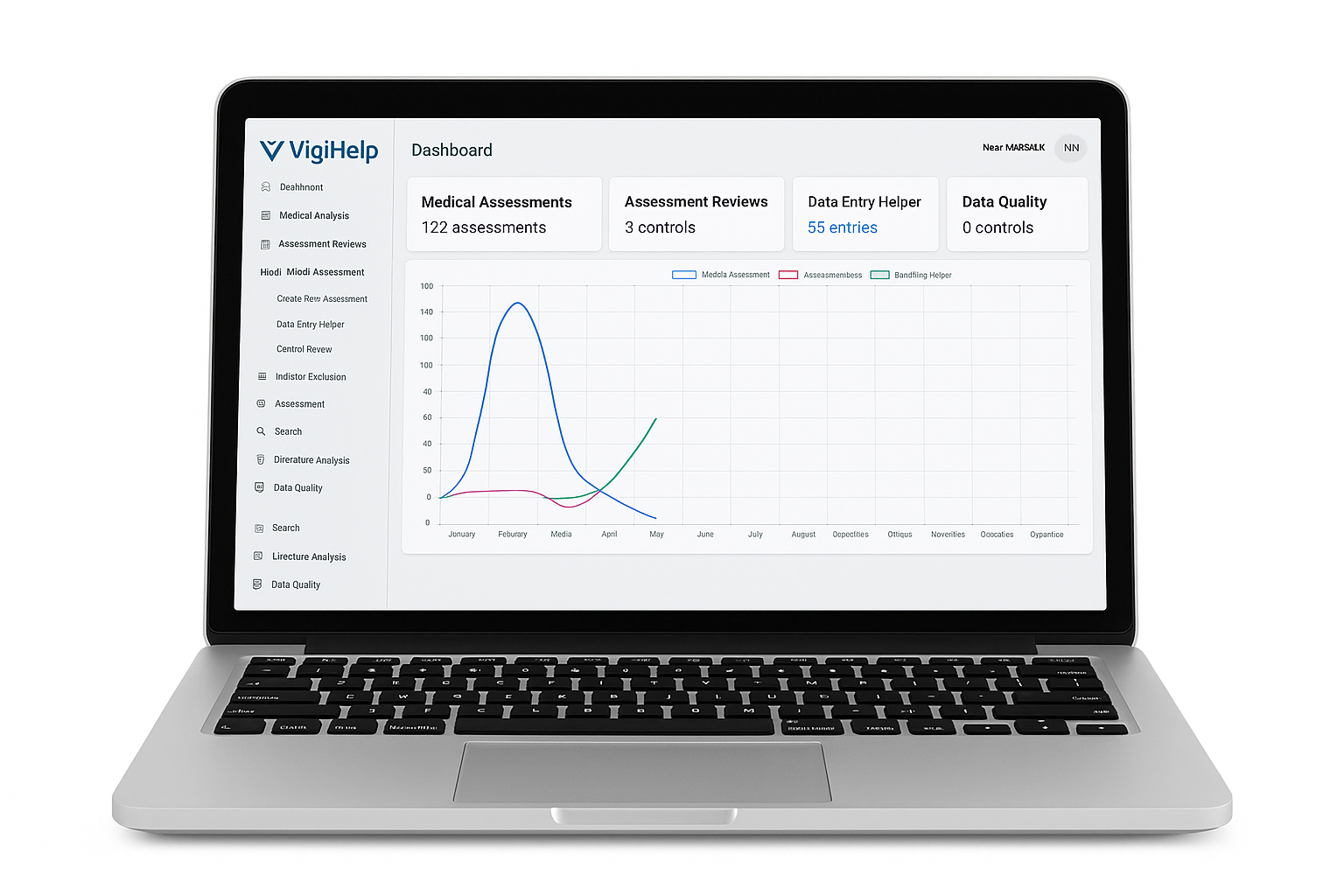
Platform view for MedDRA coding, case QC, and E2B(R3) workflow management

Capabilities

Key modules across the VigiHelp pharmacovigilance workflow

Centralized Case Data

Manage cases in one structured database built for retrieval, review, and downstream reporting.

Verbatim-to-ICSR Data Entry

Extract adverse events from unstructured narratives and turn them into reviewable ICSR records.

AI-Assisted Causality Assessment

Generate causality assessment support automatically to accelerate review workflows.

MedDRA Coding Support

Code extracted adverse events in MedDRA for compliant terminology workflows.

E2B(R3) and CIOMS Outputs

Support compliance-ready outputs for reporting teams that need structured regulatory deliverables.

Authority Submission via ESG

Submit prepared regulatory case outputs to authorities through the Electronic Submissions Gateway.

Automated Signal Detection

Monitor product-event combinations with PRR, ROR, IC, EBGM, and time-trend signal metrics.

AI-Assisted Signal Intelligence

Summarize case patterns, literature evidence, expectedness and labeling context, and reviewer notes for signal assessment.

Signal Workflow Management

Manage validation, prioritization, assessment reports, action tracking, reporting, settings, and audit trail.

Field Evidence

Proof points for pilot evaluation and operational rollout

85%

Faster Case Processing

Average processing time reduced by 85% on 100 representative test cases.

92%

Critical Fields Found

Critical fields detected correctly before human review and final validation.

QC

Structured Quality Review

Automated case quality review across structured checks before validation.

Follow-up

Missing Information

Follow-up needs are detected from missing or incomplete safety information.

Signal Detection

From automated metrics to controlled signal assessment and action tracking

Signal detection metrics and workflow dashboard

Disproportionality Metrics

Use PRR, ROR, IC, and EBGM to support product-event signal screening and reviewer prioritization.

Time Trend Monitoring

Track changes over time so reviewers can identify emerging, persistent, or changing safety patterns.

Evidence and Labeling Review

Connect case evidence, literature references, expectedness review, and labeling context to each signal record.

Reports and Audit Trail

Generate assessment reports while preserving settings, decisions, reviewer actions, and audit history.

Signal Validation

Confirm whether a detected statistical or AI-assisted finding is relevant enough to enter signal workflow.

Prioritization and Actions

Prioritize signals, assign owners, track action items, and document assessment outcomes through closure.

Compliance Focus

Built for pharmacovigilance operations that need traceable, structured outputs

VigiHelp platform workflow

Structured Traceability

Keep links between source verbatim, extracted adverse events, MedDRA codes, and case outputs.

Global Standards Support

Prepare adverse event data for teams working with E2B(R3), MedDRA, CIOMS, and ESG submission processes.

Existing Case Quality Control

Check existing case data and causality conclusions against source text and review rules.

Authority Submission Workflow

Move from validated case data to Electronic Submissions Gateway delivery within the same operational flow.